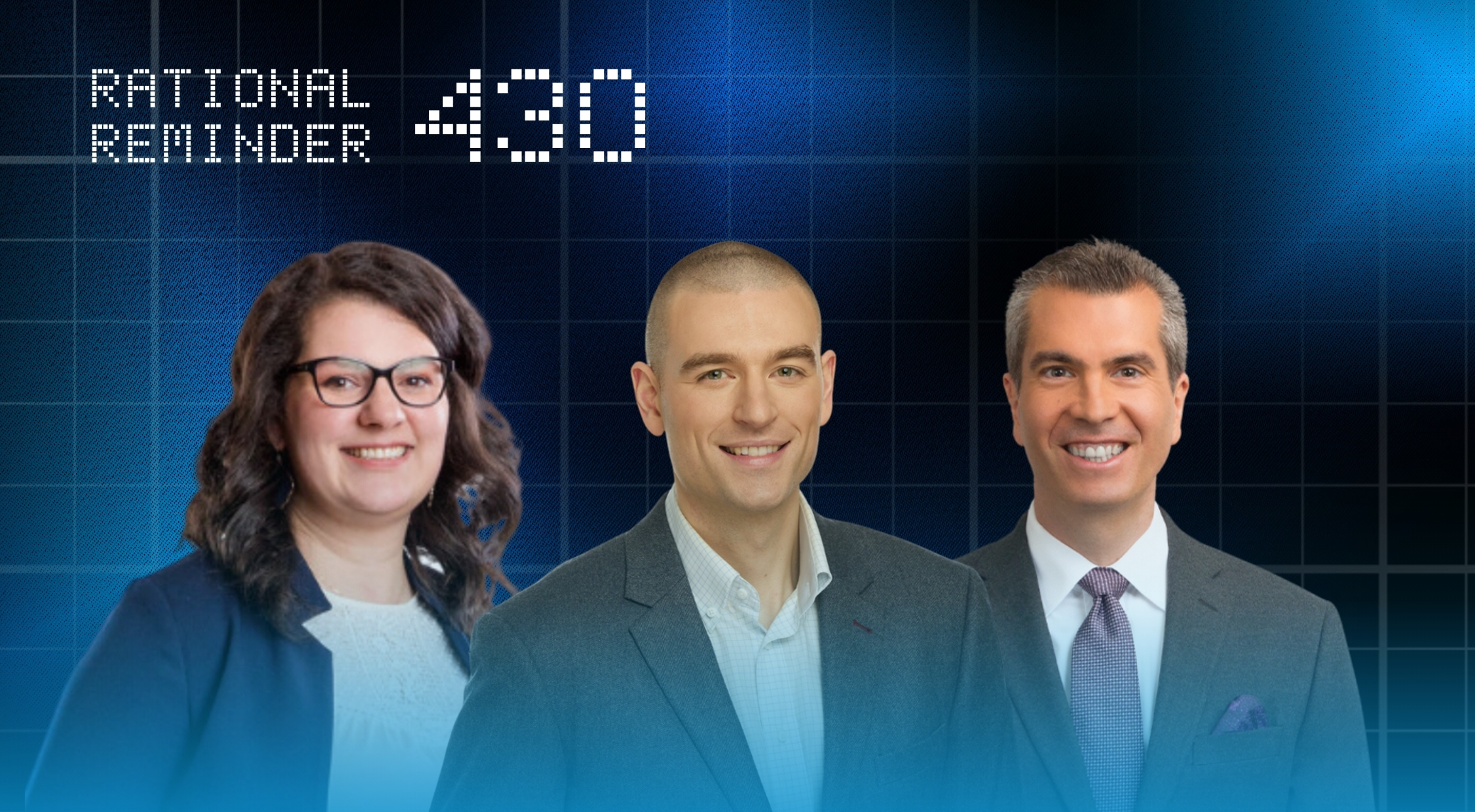
In this episode, we are joined by Chris Murray, quantitative researcher and former equity quant and trader, and Marco Sammon, Assistant Professor of Finance at Harvard Business School, for an exceptionally nerdy deep dive into leveraged exchange-traded funds (ETFs). Drawing on their research, Chris and Marco challenge common assumptions about daily rebalancing, volatility drag, and the long-term performance of leveraged products, offering a more rigorous framework for understanding how these investments actually work.
We explore the mathematics of compounding, the surprising relationship between leverage and long-term returns, and the competing effects of what Chris and Marco call the “convexity bonus” and volatility drag. They explain why leveraged ETFs don’t simply deliver a multiple of an underlying asset’s long-term return, how financing costs and fund fees compound over time, and why a stock can rise substantially while its leveraged ETF still underperforms. We also examine how daily rebalancing can affect underlying stock prices, why these effects are more pronounced in volatile, less liquid markets, and how to assess the break-even return required for leveraged ETFs to outperform their underlying assets.
Finally, we discuss what these findings mean for investors considering leverage as part of a portfolio, the distinction between modest leverage on diversified indexes and speculative single-stock products, and why the right benchmark matters when evaluating investment performance. This conversation challenges some long-held beliefs about leveraged ETFs while offering a clearer framework for understanding their risks, costs, and potential uses.
Key Points From This Episode:
(0:02:07) How leveraged ETFs target daily returns rather than long‑term multiples.
(0:03:37) Growth of leveraged ETFs, especially single‑stock and crypto products.
(0:04:09) Lottery‑like payoffs and speculative appeal of leveraged ETFs.
(0:05:18) Convenience: access to leverage without borrowing or manual rebalancing.
(0:05:51) Economic theory: human capital and equity exposure early in life.
(0:06:45) Risks of human capital — job losses and market declines coinciding.
(0:08:10) Why modest leverage (e.g., 1.25×) may align better with portfolio theory.
(0:10:42) Why 2× ETFs don’t simply double long‑term returns of the underlying.
(0:11:30) Convexity bonus: daily resets can create squared‑return benefits.
(0:12:00) Volatility drag: fluctuations erode long‑term wealth in leveraged ETFs.
(0:13:45) Distinguishing compounding effects from volatility drag.
(0:15:00) Example: up‑10%, down‑10% → underlying loses 1%, 2× ETF loses 4%.
(0:16:00) Interaction of convexity and volatility drag, amplified by large moves.
(0:20:23) Daily rebalancing: how ETF trades can influence underlying stock prices.
(0:23:00) Trading costs embedded in closing auction prices rather than spreads.
(0:25:19) Reset intervals (daily vs. weekly/hourly): trade‑offs in drift and risk.
(0:29:44) Overlapping ETFs concentrating rebalancing activity during stress.
(0:32:18) Challenging the view that daily resets make ETFs unsuitable long‑term.
(0:45:36) Break‑even return: how much the underlying must gain for ETF outperformance.
(0:49:51) Fees, financing costs, and volatility drag erasing leverage benefits.
(0:50:25) Predictable rebalancing trades and risks of front‑running.
(0:53:00) Lucid example: intraday liquidation wiping out ETF investors.
(0:55:41) Financing costs explained: borrowing ratios for 2× vs. 3× funds.
(1:03:00) Distinguishing leverage’s usefulness from product‑specific costs/risks.
(1:31:58) Could modestly leveraged index ETFs have a role in traditional portfolios?
(1:32:56) Comparing ETF‑based leverage with borrowing directly — fees, financing, and restrictions.
(1:35:28) Why speculative single‑stock leveraged ETFs attract attention while modest products struggle.
https://zbib.org/123d8b5649124244b85a4f43846a1fb4
Stay Safe From Scams — https://pwlcapital.com/stay-safe-online/
Rational Reminder on Apple Podcasts — https://itunes.apple.com/ca/podcast/the-rational-reminder-podcast/id1426530582.
Rational Reminder on Spotify —https://open.spotify.com/show/6RHWTH9iW7hdnA7eAg7ukO?si=fe7f60349b584026
Rational Reminder on Instagram — https://www.instagram.com/rationalreminder/
Rational Reminder on YouTube — https://www.youtube.com/channel/
Benjamin Felix — https://pwlcapital.com/our-team/
Benjamin on X — https://x.com/benjaminfelix
Benjamin on LinkedIn — https://www.linkedin.com/in/benjaminwfelix/