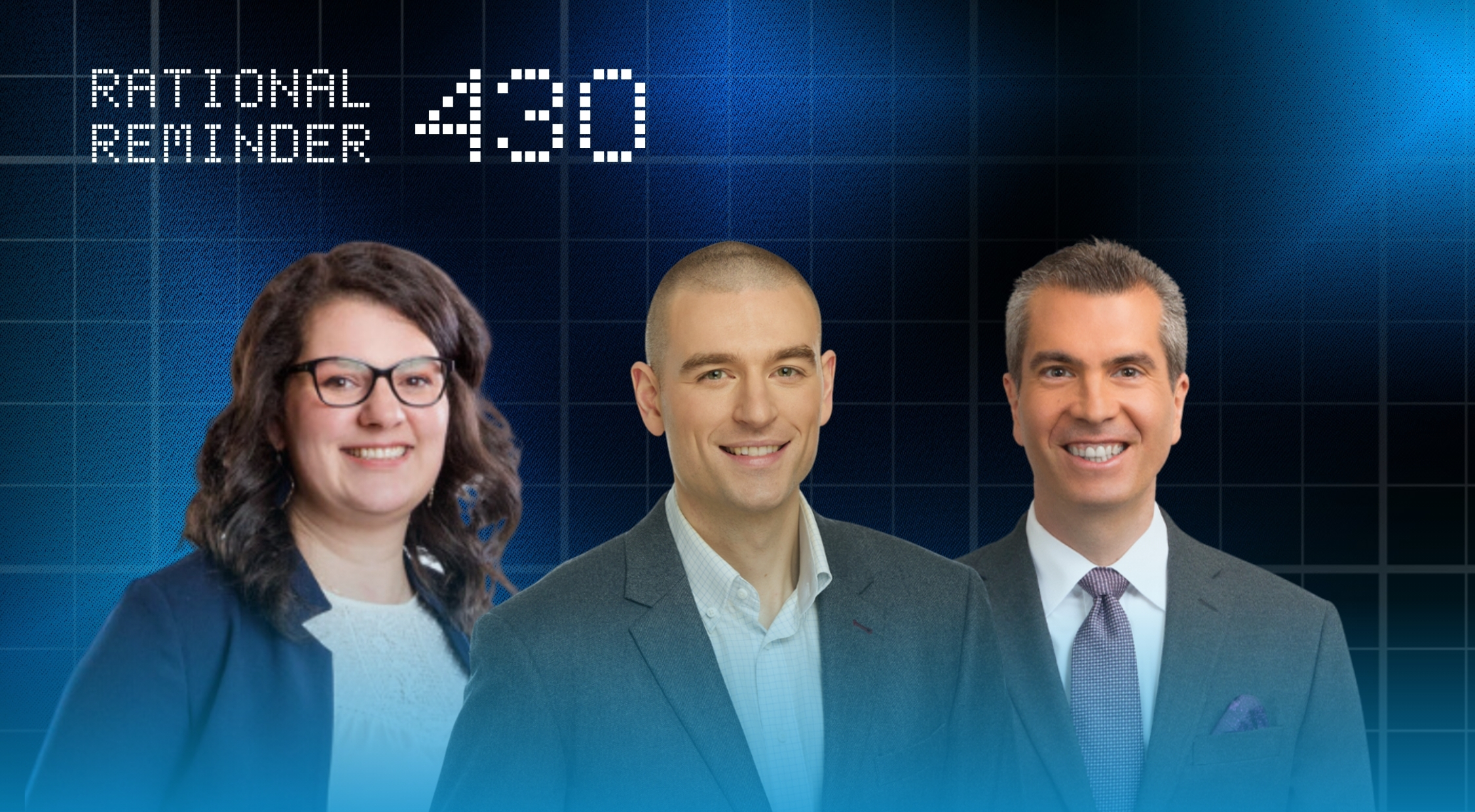
ETFs were once almost synonymous with low-cost, sensible investing. But that era is changing fast. In this episode, Ben Felix, Dan Bortolotti, and Ben Wilson introduce and unpack the concept of “ETF slop”—the explosion of complex, high-fee, behaviorally engineered ETFs that are designed to attract assets rather than improve investor outcomes. The trio traces how ETFs evolved from simple index-building tools into wrappers for increasingly speculative strategies. They discuss how the ETF “halo effect” can mislead investors into equating structure with quality, and why innovation in financial products often benefits manufacturers more than end investors. From thematic hype to downside “protection” that isn’t what it seems, the episode offers a clear framework for thinking critically about modern ETF offerings.
Key Points From This Episode:
(0:00:04) Introduction to the Rational Reminder Podcast and the hosts.
(0:00:39) Ben introduces the idea of “ETF slop” and why ETFs are no longer synonymous with sensible investing.
(2:20) More actively managed ETFs now exist than index-tracking ETFs in the U.S.
(3:30) ETFs increasingly engineered to attract assets rather than improve investor outcomes.
(4:04) Record ETF launches in 2025: over 1,000 in the U.S. and 300+ in Canada.
(6:43) Average management fees on newly launched ETFs rival traditional active mutual funds.
(7:47) The ETF “halo effect” and why structure is mistaken for quality.
(10:31) What an ETF actually is—and why it’s just a wrapper for a strategy.
(11:13) The first ETF was launched in Canada and still exists today.
(14:40) ETFs as tools for speculation versus long-term investing.
(17:08) Evidence that simpler allocation funds reduce harmful investor behavior.
(20:35) Why too much product choice can make good investing harder.
(21:40) Four categories of ETF slop introduced: thematic, buffer, covered call, and single-stock ETFs.
(22:16) Why thematic ETFs appeal to optimism and extrapolation bias.
(24:04) Evidence that most thematic ETFs underperform after launch.
(26:25) Morningstar data: almost no thematic ETFs outperform over long horizons.
(28:55) Why exciting narratives don’t translate into superior returns.
(31:25) Buffer ETFs explained: capped upside with partial downside protection.
(34:31) Research showing high fees, high costs, and inconsistent protection.
(38:16) Why simple stock/bond mixes dominate buffer ETFs even in drawdowns.
(42:53) Covered calls: high income today, lower total returns tomorrow.
(45:48) Why covered call ETFs systematically underperform their underlying assets.
(47:38) Income needs can be met more efficiently without covered calls.
(48:19) The cult-like following driven by double-digit yield marketing.
(49:57) Single-stock ETFs as the “sloppiest” form of ETF slop.
(53:44) Leveraged and inverse ETFs magnify volatility and complexity.
(56:20) Research showing massive underperformance versus simple benchmarks.
(58:56) Why these products resemble speculation more than investing.
(1:03:35) Complexity in investment products is strongly linked to poor outcomes.
(1:05:48) John Bogle’s warning: beware of new and “hot” investment products.
(1:06:48) Why ETFs are powerful tools—but only when used correctly.
https://community.rationalreminder.ca/t/episode-392-the-rise-of-etf-slop/41003
Meet with PWL Capital: https://calendly.com/d/3vm-t2j-h3p
Rational Reminder on iTunes — https://itunes.apple.com/ca/podcast/the-rational-reminder-podcast/id1426530582.
Rational Reminder on Instagram — https://www.instagram.com/rationalreminder/
Rational Reminder on YouTube — https://www.youtube.com/channel/
Benjamin Felix — https://pwlcapital.com/our-team/
Benjamin on X — https://x.com/benjaminwfelix
Benjamin on LinkedIn — https://www.linkedin.com/in/benjaminwfelix/
Ben Wilson on LinkedIn — https://www.linkedin.com/in/ben-wilson/